 Cheqq
CheqqIt builds the system, then gets out of the way.
One agent you talk to, with a specialist behind it for every system you install — each scoped to its own data, and to the role you actually hold.
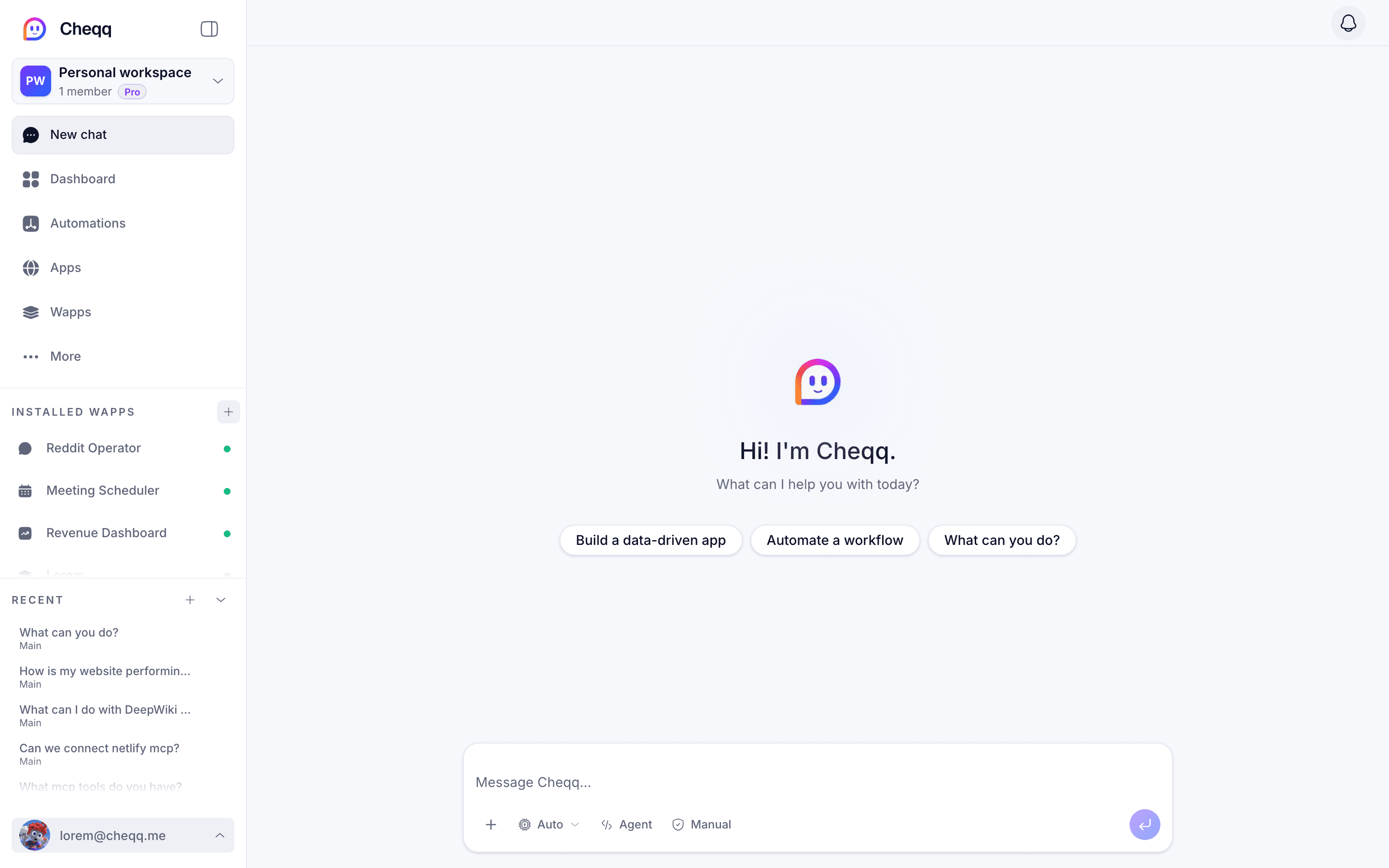
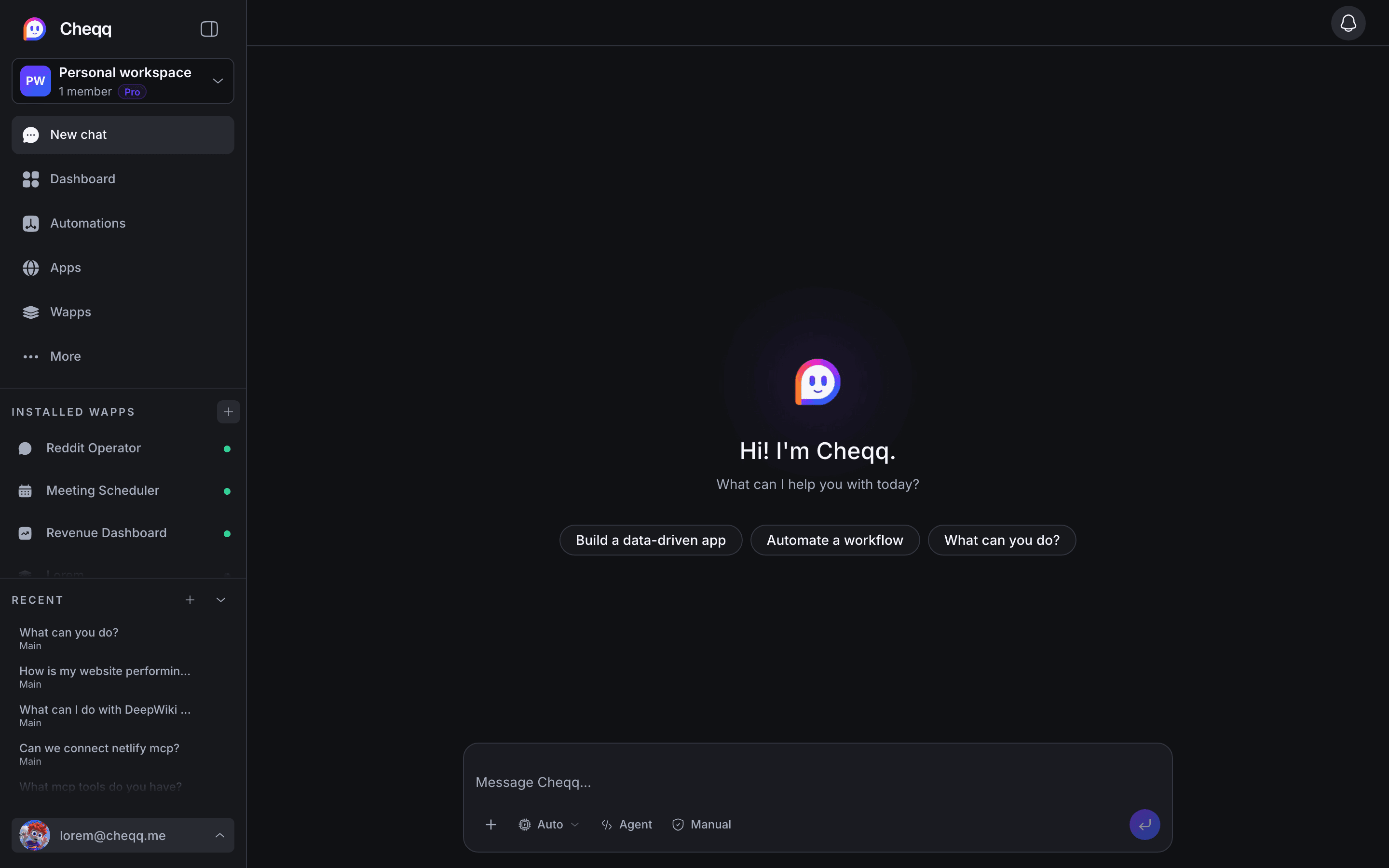
- Describe it, don't build it
- then it runs without AI
- Knows your systems
- a specialist for each one
- Undo any turn
- back to any point, any time
- Asks before it acts
- on anything that matters
A specialist per system, not one agent guessing.
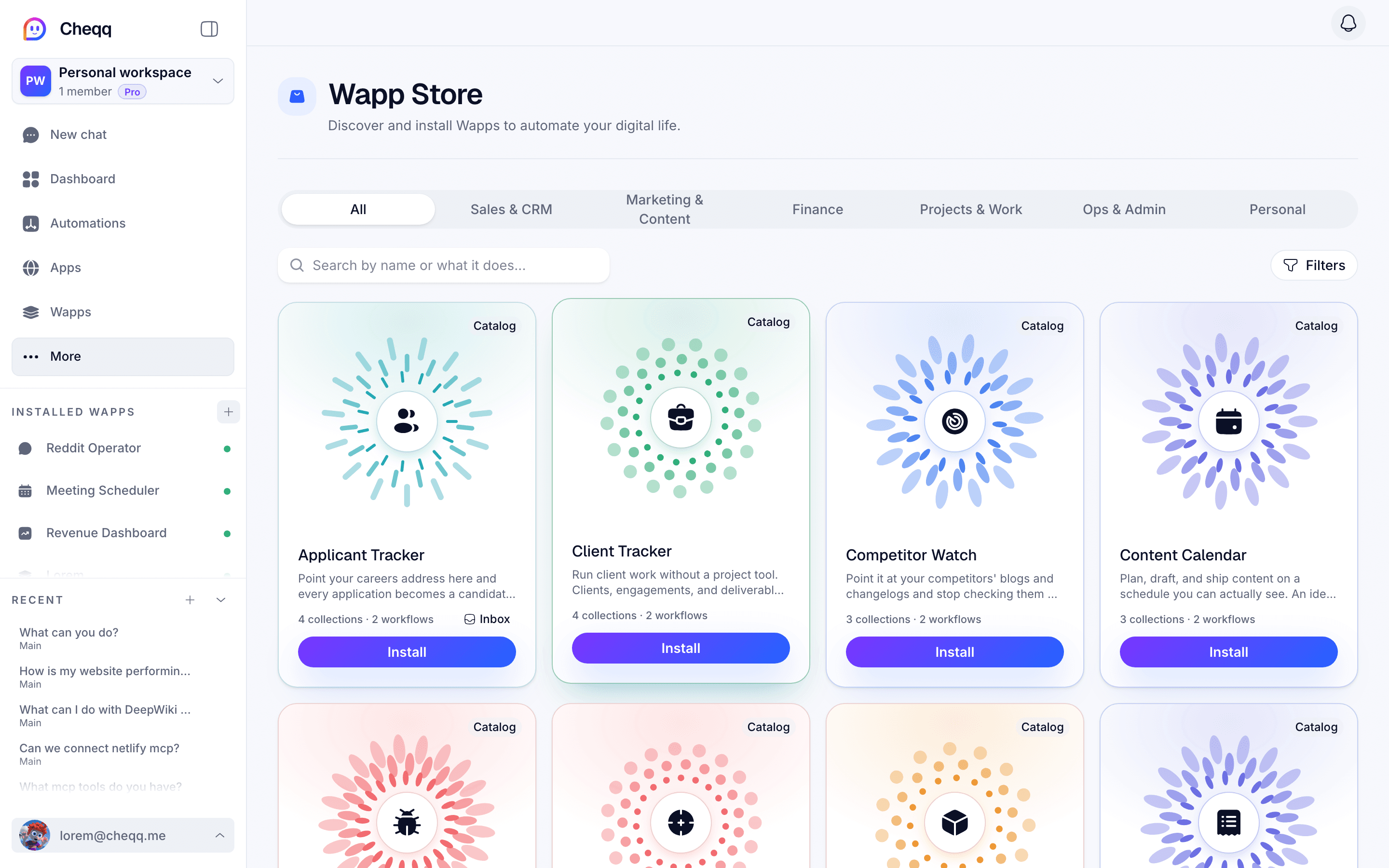
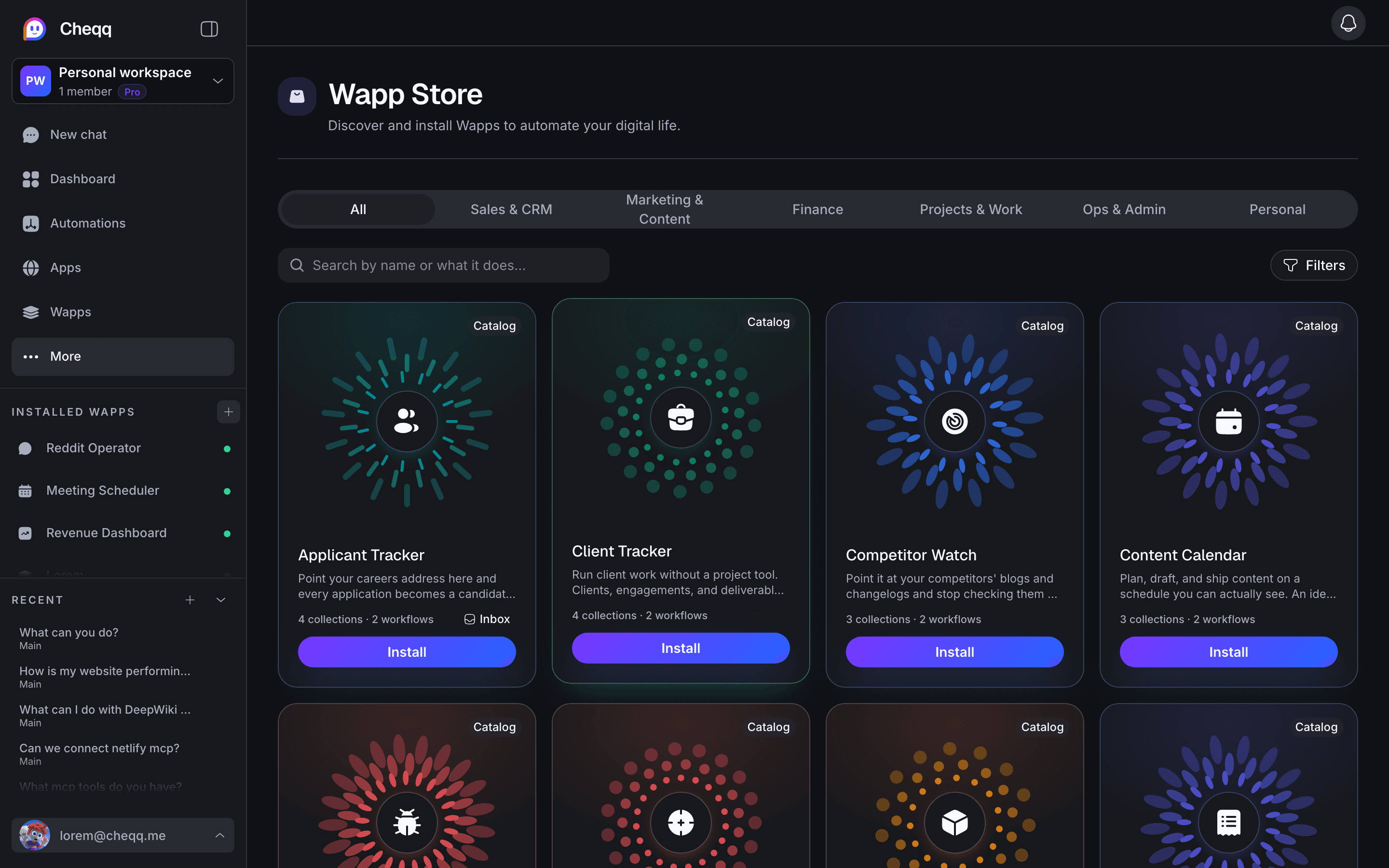
Install a Wapp and the supervisor gains a child agent that knows it — its collections, its workflows, its instructions. Ask a broad question and the work is routed to whichever specialists it touches, with their progress streamed back as it happens.
- One child agent per installed Wapp, scoped to that Wapp's tools
- Access filtered by your role, so a read-only install stays read-only through delegation
- A dedicated workflow-builder agent for authoring automations
- Live subagent progress, so you can see which specialist is doing what
Every turn is a place you can go back to.
Agents make mistakes. Restore any accepted turn and the conversation goes back with it — and the future you abandoned stays recoverable. Fork instead, and you get an independent branch with a copy of the artifact, not just the transcript.
- Restore a turn, and undo the restore if you change your mind
- Fork duplicates the workflow, Wapp or app too — forked workflows start inactive, forked apps unpublished
- The confirmation spells out what can be restored and which external effects cannot
- Runs survive a closed tab and resume where they were
It gets better at your work specifically.
Install skills from the store or upload your own bundles, and the agent picks up procedures particular to how you operate. Observational memory keeps what matters between conversations.
- Installable skills across productivity, development, data, communication, finance and marketing
- Upload your own .skill or .zip bundles into the agent's workspace
- Per-workspace instructions and an agent personality you set
- Tool approval gates, so nothing consequential runs unasked
An agent you can supervise
Three modes
Ask for read-only answers, Plan for a written plan before anything happens, Agent when you want it to act.
You keep the wheel
Tool calls can require approval, and you can take control of a browser run at any moment and hand it back.
Model of your choice
A curated managed catalogue with live credit cost per model, or bring your own OpenAI, Anthropic, Google or OpenRouter key.
Scoped, not omniscient
Each specialist sees only its own Wapp. Delegation cannot widen the access your role already grants.
Questions about agents
Is this just a chatbot over my data?
No. The agent builds and operates the systems — collections, workflows, apps, documents — and then steps out of the way. Day-to-day running is deterministic; the agent re-engages to change something, repair something, or answer a question.
What stops it doing something I did not want?
Several things: Ask and Plan modes that cannot act, tool approval gates, per-Wapp scoping filtered by your role, human approval on risky workflow steps, and checkpoint restore on every turn.
Can I use my own model keys?
Yes, on paid plans. Bring an OpenAI, Anthropic, Google or OpenRouter key and pay your provider directly — Cheqq does not mark up inference.
Works with the rest of the workspace
Put an agent to work
Describe what you need handled and let it build the system that handles it. Free to start.
Start free